

A law firm case results page can be one of the strongest trust-building assets on an attorney website. It gives prospective clients a concrete way to understand the kinds of matters a firm has handled, the problems its lawyers have helped address, and the experience behind the firm’s marketing claims.
But a results page also carries unusual risk. If it becomes a wall of oversized dollar amounts, vague victories, or repeated claims that imply future outcomes, it can weaken credibility and create advertising-compliance concerns. If it is thin, disorganized, or disconnected from the rest of the website, it may add little SEO value.
The best case-results pages balance three goals: accuracy, usefulness, and a clear path to the next step. They provide enough context to help a visitor understand the work, organize information so search engines can interpret it, and avoid turning past outcomes into promises.
What Is a Law Firm Case Results Page?
A law firm case results page is a webpage or library that presents selected outcomes from matters the firm has handled. Depending on the practice and what the firm is permitted to disclose, an entry may include the type of matter, general factual context, the legal challenge, the firm’s role, and the resolution.
The page is not simply a trophy case. For a prospective client, the useful question is not “How big was the number?” It is “Has this firm handled a problem that resembles mine, and can I understand what it did?”
That distinction should shape the page. A list of unexplained results may catch attention, but a well-organized library helps visitors evaluate relevance. It can also support the firm’s practice-area pages by adding evidence and context around the work described there.
Why Case Results Can Support SEO and Conversion
Case results can contribute to a stronger website when they add original, useful information rather than repeating generic claims.
They demonstrate experience with real problems
Searchers often compare several firms before contacting one. A relevant result can make a firm’s experience easier to understand. The strongest entries explain the type of challenge and the work involved without revealing confidential information.
They create meaningful internal-link opportunities
A motor-vehicle result can link to the firm’s vehicle-accident page. A commercial dispute can link to the applicable litigation service. The practice-area page can link back to a filtered results category. These connections help people move between proof and service information while clarifying site structure for search engines.
They help answer high-intent questions
Visitors approaching a hiring decision want evidence, process clarity, attorney information, and an easy way to make contact. A good result can address those needs in one place. It works especially well when paired with strong attorney bio pages and a clear consultation path.
They provide first-hand material
Google’s guidance emphasizes people-first content that demonstrates first-hand experience and helps a visitor complete a task. A result that accurately explains the firm’s work offers more original value than another generic summary of the law. It should still be written for the visitor, not manufactured simply to create more URLs.
Law Firm Case Results Page Checklist
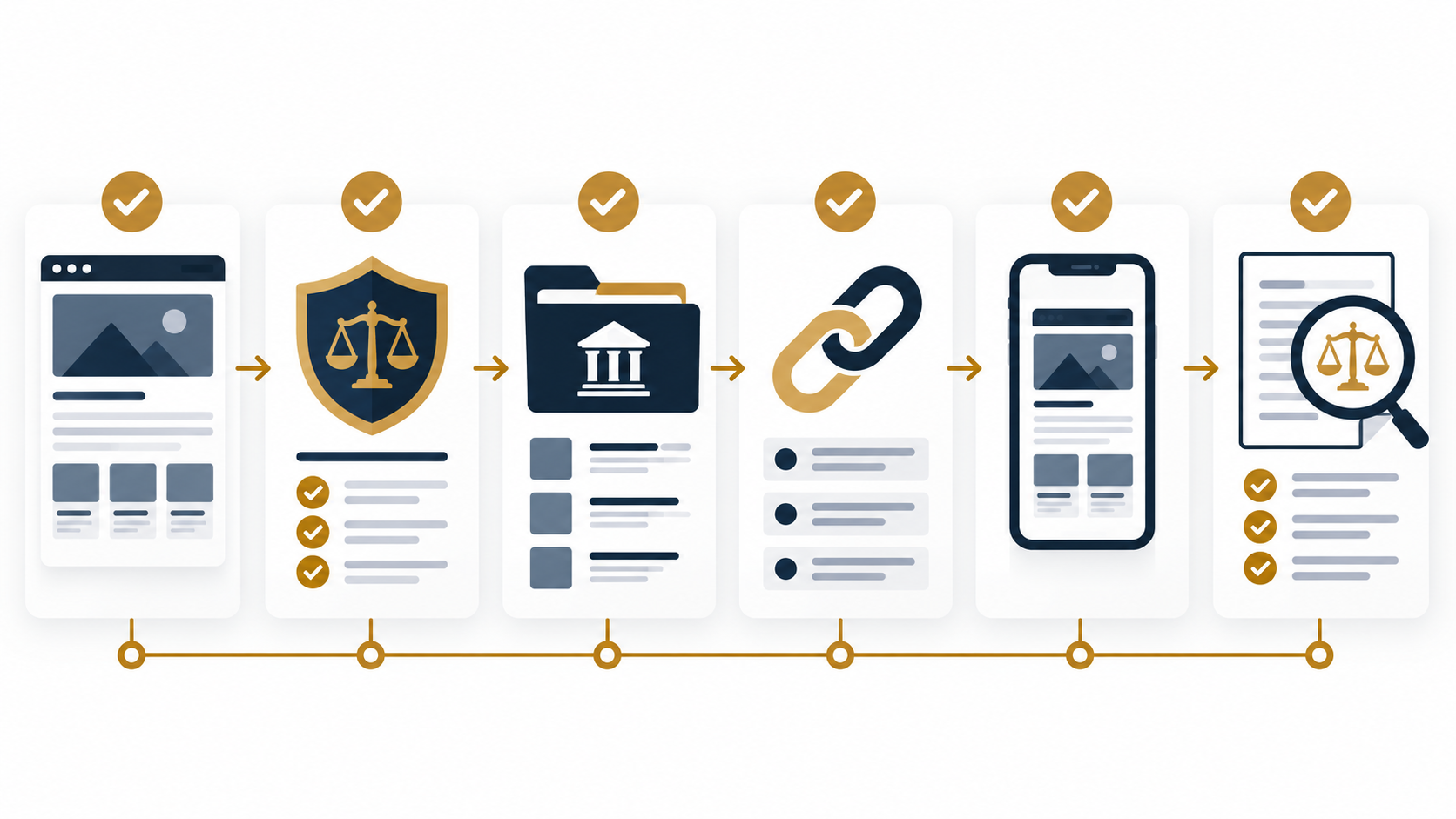
A useful results library needs more than a headline and an outcome. Use the following checklist before publishing any entry.
1. Confirm permission and confidentiality
Determine what may be disclosed before writing. Remove or generalize identifying details where necessary. Do not rely on public availability as automatic permission to turn a matter into marketing content. The responsible attorney should review the final language.
2. Describe the matter accurately
Use specific but restrained language. Explain the category of matter, the client’s general challenge, and the work performed. Avoid invented drama, unsupported superlatives, or language that changes the meaning of the outcome.
3. Add the context behind the result
An isolated number does not explain the case. Relevant context might include the legal issue, procedural stage, key challenge, or type of resolution. Do not publish confidential strategy or details the client has not authorized.
4. Include a clear disclaimer
Past results do not guarantee future outcomes. The exact disclaimer and its placement should be reviewed under the advertising rules that apply to the firm. Rules vary by jurisdiction and practice, so a generic template should not replace a compliance review.
5. Connect the result to a relevant service
Link naturally to the closest practice-area or service page. This gives the reader a useful next step and helps prevent a result page from becoming an isolated page with no place in the website’s architecture.
6. Make the next action easy
After providing the result, offer a calm, specific next step: learn about the relevant service, meet the attorney, or request a consultation. The call to action should not imply that a similar result is expected.
A Strong Structure for Individual Case Results
If a firm has enough substantive, permitted information, individual result pages can provide more value than one long list. A practical structure is:
- Clear descriptive title. State the matter type and general outcome without sensationalizing it.
- Short summary. Explain what the visitor will learn.
- The client’s challenge. Describe the situation at a high level without disclosing protected details.
- The firm’s work. Explain the legal or strategic work that can responsibly be shared.
- The resolution. State the result accurately, with needed qualifications.
- Important context. Note that outcomes depend on facts, law, evidence, jurisdiction, and other case-specific factors.
- Related resources. Link to the attorney, practice area, and one or two useful articles.
- Consultation path. Offer a relevant next step without pressure or guarantees.
For smaller result entries, the same structure can be compressed into a card or expandable section. The key is that every entry should help a visitor understand relevance, not simply increase the count of published results.
How to Organize a Results Library
As the library grows, organization becomes essential. Visitors should be able to find related outcomes without scanning an endless page.
Useful filters may include:
- practice area;
- case or claim type;
- type of resolution;
- jurisdiction, only when accurate and appropriate;
- attorney or team; and
- year, if the date is meaningful and permitted.
Avoid creating hundreds of nearly empty filter pages. Indexable pages should have a clear purpose, unique value, and enough content to satisfy the searcher’s intent. Google’s long-standing doorway-page guidance warns against pages created mainly to expand search footprint without distinct user value.
A firm can begin with one curated results hub and create individual pages only for matters that support a genuinely useful explanation. That keeps the content system manageable and reduces thin-page proliferation.
On-Page SEO for Case Results
The SEO fundamentals are straightforward, but accuracy comes first.
Use a descriptive title and URL
The title should help a visitor understand the matter. A URL such as /case-results/commercial-lease-dispute-resolution/ is more informative than an internal case number. Do not change existing published URLs casually; preserve established URLs unless a migration is planned and approved.
Write a unique summary
Each result needs a distinct introduction. Reusing the same paragraph with only a city or practice-area term changed can look thin and offers little value.
Use headings that reflect the reader’s questions
Headings such as “The challenge,” “What the firm did,” and “How the matter was resolved” make the page easier to scan. They also help search engines understand the content without keyword stuffing.
Add relevant internal links
Link to the practice area, the responsible attorney when appropriate, and a helpful resource. The surrounding anchor text should describe the destination naturally. A result about an accident campaign, for example, might connect to the firm’s broader personal injury marketing strategy.
Use images carefully
Never imply that a stock or AI-generated image depicts the actual client, accident, courtroom, or property. For many entries, a neutral practice-area graphic or no image at all is safer than a misleading scene. Alt text should describe the image, not repeat a keyword list.
Keep structured data factual
Do not mark case results as reviews, ratings, or awards unless those properties are real, visible, and supported. Schema cannot repair thin content and should never contain claims that do not appear on the page.
Common Mistakes to Avoid
Publishing only dollar amounts
Large numbers may get attention, but without context they do not help a prospect understand the firm’s work. They may also create an impression that a similar outcome is typical.
Treating every result as its own thin page
One or two sentences rarely justify a standalone URL. Keep brief items in a well-organized hub unless there is enough permitted substance to create a useful page.
Using vague claims
Phrases such as “record-breaking,” “maximum compensation,” or “best possible result” require strong substantiation and may still create compliance problems. Use precise language that can be verified.
Forgetting mobile visitors
Results cards, filters, disclaimers, and calls to action must work on a phone. If a user cannot read the context or find the disclaimer without awkward scrolling, the design undermines trust.
Separating results from intake
The visitor should not reach the end and wonder what to do. Connect the page to a simple consultation path and make sure the intake team can identify which result or practice area prompted the inquiry. A law firm marketing dashboard can help the firm evaluate whether results content contributes to qualified conversations rather than only pageviews.
How to Measure Whether the Page Is Working
Do not judge the page only by traffic. Track the quality of the journey around it.
Useful measures include:
- organic entrances to the results hub and individual results;
- clicks from results to practice-area pages;
- attorney-profile views after a result;
- consultation starts and completed forms;
- qualified calls associated with the page; and
- assisted conversions in longer decision journeys.
Review search queries and user behavior together. If visitors arrive for an unrelated intent, the title or page structure may need refinement. If people read a result but never explore the service, strengthen the internal path before assuming the content itself is ineffective.
Build Proof Without Turning It Into a Promise
A law firm case results page works best when it helps a prospective client evaluate fit. It should show experience with enough context to be meaningful, protect client confidentiality, respect the firm’s advertising obligations, and connect naturally to the rest of the website.
The goal is not to publish the largest number or the longest list. It is to build a reliable proof system: accurate results, relevant service pages, credible attorney profiles, and a clear intake experience.
If your firm needs a website and SEO system that connects trust signals to qualified case opportunities, apply for a LawProNation discovery call.