


An attorney bio page is often where a prospective client decides whether a lawyer feels credible, relevant, and approachable. Yet many law firm websites treat attorney profiles as short résumés: a headshot, a list of schools, a bar admission, and a paragraph filled with general claims. That format may document a career, but it rarely answers the visitor’s real questions.
Attorney bio page SEO starts by making the profile useful to both people and search engines. The page should explain who the lawyer helps, what matters they handle, what experience can be verified, and what the visitor should do next. It should also connect naturally to the firm’s practice-area pages and other resources instead of sitting alone in the website architecture.
This guide explains how to turn a thin lawyer profile into a search-friendly, client-centered page without exaggerating credentials or forcing keywords into the copy.
Why Attorney Bio Pages Matter for Search and Conversion
Legal services are trust-sensitive. A visitor may arrive through a practice-area page, a referral, a branded search, or a Google Business Profile, then look for the specific attorney who may handle the matter. At that moment, the bio page has a different job than the homepage.
The homepage explains the firm. The bio page explains the person.
A strong attorney profile should help a visitor answer:
- Does this lawyer work on the type of problem I have?
- Is the information specific enough to be credible?
- Are the lawyer’s qualifications and admissions clear?
- Can I understand the lawyer’s approach without legal jargon?
- Is there an obvious way to contact the firm?
Google’s guidance on people-first content also encourages clear, accurate authorship information and bylines that lead to useful background about the author. That does not mean a bio automatically ranks because it is longer. It means the page should make the identity and experience behind the content understandable and verifiable.
Start With the Search Intent of a Lawyer Profile
Someone searching a lawyer’s name may already know the firm. Someone searching for a type of attorney may still be comparing options. A useful bio can serve both visitors when it is written around relevance instead of self-congratulation.
Before rewriting the page, identify the attorney’s actual scope:
- primary practice areas;
- jurisdictions and bar admissions;
- client or matter types served;
- languages spoken, if verified;
- leadership, publications, or community involvement that can be documented;
- the most appropriate next action for a prospective client.
Avoid turning every bio into a duplicate practice-area page. The profile should summarize the lawyer’s relevant work and link to the detailed service page. This supports a clearer site structure and reduces the chance that two pages compete for the same broad query.
Build a Clear Page Structure
An optimized lawyer bio page should be easy to scan on a phone. A practical structure is:
- A clear page title using the attorney’s real name and role.
- A short opening that identifies the people or matters the lawyer serves.
- A focused explanation of practice experience.
- Verified credentials, admissions, education, and professional affiliations.
- Relevant representative work, publications, or community involvement when appropriate and supportable.
- Links to closely related practice areas and educational resources.
- A clear contact or consultation action.
The opening paragraph deserves particular attention. Compare a generic statement such as “Jane is a dedicated advocate who fights for clients” with a specific statement that identifies the matters Jane handles, the jurisdiction in which she practices, and how she helps clients understand the next step. The second version gives the visitor usable information.
Attorney Bio Page Checklist
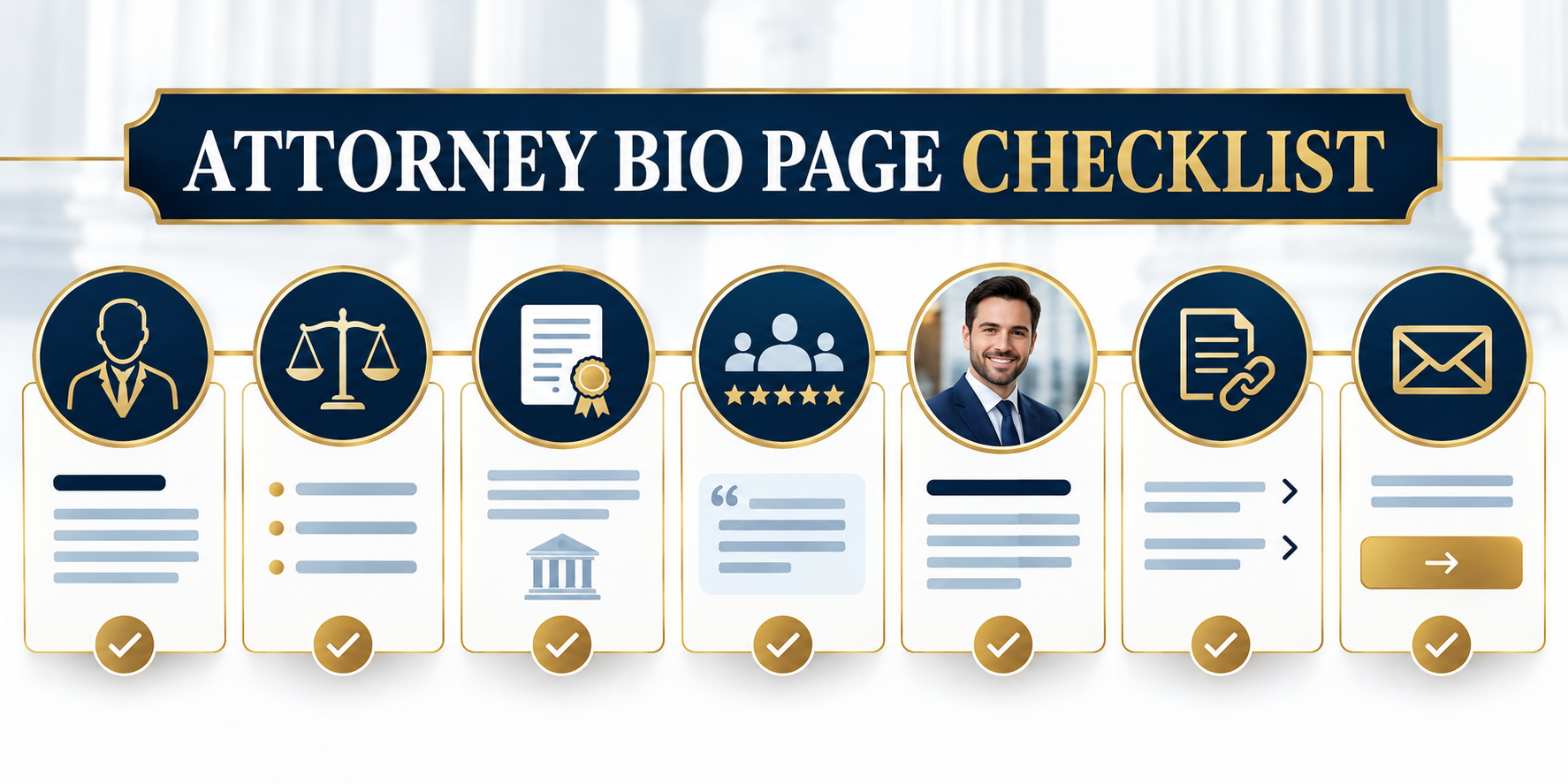
The essentials should be visible without making the page feel like a credential dump.
Use a descriptive title and heading
The title should normally include the attorney’s full name and a truthful professional descriptor, such as practice focus or role. Do not add specialties, certifications, or superlatives that the firm cannot substantiate or that local advertising rules restrict.
Write a client-centered introduction
Lead with what the lawyer does for clients. Education and career history can follow. A visitor dealing with a legal problem wants to know whether the lawyer is relevant before reading a chronological biography.
Include only verified credentials
Confirm bar admissions, licenses, awards, board certifications, employment history, and education before publication. If a credential has expired or is limited to a particular jurisdiction, the wording should reflect that accurately.
Add a professional, current image
Use a high-quality image that accurately depicts the attorney. Give the image descriptive alt text, usually the attorney’s name and role, without stuffing practice-area keywords. Avoid using an AI-generated person to represent a real lawyer.
Link to the right practice pages
Internal links help visitors move from the attorney’s overview to the detailed service information they need. Use natural anchors such as “personal injury representation” or “estate planning services,” and link only where the attorney genuinely works in that area.
Provide a useful next step
A bio should not end abruptly after the education section. Include a clear action: contact the firm, request a consultation, or learn more about a relevant service. The action should match the firm’s real intake process.
Add Evidence Without Creating Compliance Risk
Specificity builds trust, but only when the facts are supportable. Law firms should review profile copy for advertising and ethics compliance before publishing it.
Useful evidence may include:
- accurately stated bar admissions and court admissions;
- verified education and certifications;
- named publications or speaking engagements;
- professional memberships that are current;
- representative matters described in a way that protects confidentiality and complies with applicable rules;
- awards presented with the awarding body and selection context when required.
Avoid invented case outcomes, vague “top lawyer” claims, unverifiable rankings, or confidential client details. If results are mentioned, use the firm’s approved disclaimer and avoid implying that a past result guarantees a future outcome.
Connect the Bio to the Rest of the Website
An attorney page should be part of the website’s content system, not an isolated profile. Link from relevant practice pages to the lawyers who actually handle those matters. When an attorney authors an educational article, connect the byline to the attorney profile. When appropriate, link the profile to the attorney’s articles, interviews, or resources.
This relationship helps visitors understand who created the content and where that person’s experience fits. It also gives search engines crawlable paths between related pages. The same principle applies across a broader law firm SEO content brief: every page should have a distinct purpose and a logical place in the site architecture.
For firms redesigning or migrating a website, attorney profiles should be included in the law firm website migration SEO checklist. Preserving established profile URLs and internal links can prevent unnecessary disruption.
Handle Structured Data Carefully
Schema can help search engines understand the type of page and the entity it describes, but it must match visible content. Depending on the site’s approved setup, an attorney profile may be represented through Person or ProfilePage-related structured data.
Do not add credentials, awards, addresses, ratings, or memberships to structured data unless they are accurate and supported on the page. Test any implementation with Google’s Rich Results Test, and avoid creating custom markup that conflicts with the SEO plugin or theme.
Schema is an enhancement, not a substitute for a useful profile. A thin biography with elaborate markup is still a thin biography.
Review the Technical SEO Basics
Before publishing or updating attorney bios, confirm:
- one canonical URL exists for each lawyer;
- the page is indexable and not accidentally blocked;
- the title tag and meta description are unique;
- the H1 accurately names the attorney;
- the headshot is compressed and loads quickly;
- internal links work;
- the page renders well on mobile;
- retired attorneys and changed roles are handled through an approved content and redirect plan.
Do not change a live bio URL simply to make it shorter. If a URL change is genuinely necessary, document the old and new addresses and obtain approval for a permanent redirect.
Measure More Than Rankings
Rankings matter, but a bio page also supports conversion. Track useful signals such as visits from branded search, clicks to practice pages, consultation actions, phone clicks, and engagement with the attorney’s related articles. Compare profiles using the same definitions so the analysis is meaningful.
If a bio attracts traffic but produces few next steps, review the opening copy, relevance, calls to action, page speed, and mobile layout. If it receives little visibility, review whether the page answers a distinct search need, has enough internal links, and provides information beyond a generic résumé.
A Practical Optimization Workflow
Use a repeatable process for each attorney:
- Record the current URL, title, metadata, author information, and indexability.
- Verify every credential and jurisdictional statement.
- Define the page’s audience and primary purpose.
- Rewrite the opening around client relevance.
- Organize credentials and experience into scannable sections.
- Add only accurate internal links and a clear next action.
- Confirm image quality, alt text, mobile layout, metadata, canonical, and indexability.
- Publish, open the public URL, and test the experience.
When a firm has many attorneys, start with high-visibility profiles and create a shared quality standard. Consistency in structure helps users, but the substance of each biography should remain genuinely specific to the lawyer.
Turn Profiles Into Useful Decision Pages
Attorney bio page SEO is not about repeating a practice-area keyword beside a headshot. It is about making a lawyer’s identity, experience, relevance, and next step clear enough that a prospective client can make an informed decision.
The strongest profiles combine accurate information, thoughtful internal links, a credible image, useful structure, and a direct path to contact. When those elements work together, the bio becomes more than a staff page—it becomes a meaningful part of the firm’s search and intake experience.